How to sail, fight and get rich in the Indies
Last updated October 28, 2026
So you've a ship, a few dozen hands with no great love for honest work, and 1,200 pieces of eight in the chest. The whole Caribbean is out there, every sail on it a prize or a danger, and nobody's going to tell you which. Except this guide. It'll tell you a little.
You don't need to read it to play. The game teaches you as you sail, and finding things out the hard way is half the fun. But if you're the sort of captain who studies the chart before weighing anchor, here's what the old hands know.
Your first command
Tap New Voyage and you choose two things: the year you sail in, and the flag you sail under.
The year is one of five eras between 1628 and 1716, and it decides nearly everything: which harbours are open and who holds them, who's at war with whom, and who'll sign a letter of marque for you. In 1628 Jamaica is still Spanish and a treasure galleon crosses the Main each summer. By 1716 the wars are over, Nassau belongs to the pirates, and the King's ships are coming for them. If you're new, 1662, the Buccaneers of Jamaica, is the one to start with: one enemy (Spain), and plenty of harbours that'll welcome you.
The flag is England, Spain, France, the Dutch, or the Brethren of the Coast. A nation's captain starts outside its home port with friends and enemies already made. A pirate starts with every nation a little wary of them and the Brethren's goodwill.


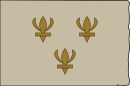

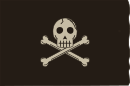
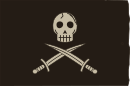
Sail as a pirate and you pick your colours too, from nine:
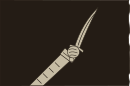
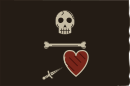

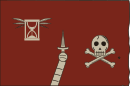



Whatever you choose, you start the same way: at six in the morning, just outside your home port, in the smallest ship your nation builds, fully manned and armed. The English get a twelve-gun ketch; a pirate gets a four-gun periagua and a lot of ambition. Your ship is always called the Black Mercy. Make the name mean something.
Taking the helm
At the foot of the screen is the top half of a ship's wheel. Turn it clockwise and she turns to starboard; anticlockwise, to larboard. On iPhone you'll feel a little tick as the spokes go round.
Tap the sail beside the wheel to make sail and she'll keep going on her own. Tap again to heave to. The helm starts lashed: turn the wheel and it stays where you leave it, so she sails round in a circle until you straighten up. Tap the hub to unlash it, and the wheel springs back to midships when you let go, holding your new course. Try both. Most captains have a strong opinion by the end of the first day.
Then there's the wind. In the Caribbean it blows from the east-north-east, the trade wind, shifting a little hour by hour. Which way you're heading against it matters more than anything else about how fast you go:
So sailing from Barbados down to Jamaica is a lovely downhill run, and getting back again is a slog. She never stops dead, even heading straight into it, but you'll learn to plan your voyages with the wind, the way real captains did. A damaged flagship slows the whole fleet down too, so keep her hull patched.
If you run her at a coast, she won't wreck. She'll bear off and slide along the shore until you steer her clear.
Reading the chart
The sea you sail across is an engraved chart of the Caribbean, from Texas to Barbados and up to the Bermudas. The coastlines are real, drawn the way a chartmaker of the 1660s would have had them: Cuba a bit fat, Florida a bit stubby, and the little islands bigger than life so you can find them. The top of the screen always tells you where you are: off Port Royal, in the Windward Passage, or just the Caribbean Sea.
Tap Chart to unroll the whole thing. The sea stands still while you pore over it; pinch to zoom and drag to look about, then tap Helm to get back to sailing.
- Every open harbour flies the flag of whoever holds her. Harbours that would turn you away are drawn in red. Watch them change as your name rises and falls.
- Dotted red lines are the trade routes between the great harbours, signposted “to Havana →” along the way. Where merchantmen go, plunder goes.
- Out between Florida, the Bermudas and Puerto Rico lie the Devil's Waters. Sailors speak of them in low voices.
Sail within reach of an open harbour and you're in port.
Sail ho!
Other ships come and go over the horizon all the time. You'll meet more of a nation's ships near its own harbours, and more pirates near Tortuga. The lookout calls down what can be made out, and more can be made out the closer she gets:
Warships and pirates who mean you harm will come straight for you. Merchantmen who don't like the look of you will turn tail. When she's close enough, the sea stops and a card tells you who she is:
The Santa Inés
A Spanish urca
She is lawful prize.
That line in italics matters. It says what a court would make of you taking her: lawful prize if you hold a letter of marque against her nation, no court would condemn her if you don't, and, if she flies a friendly flag, to fire on her is piracy. Attack a friend and her nation won't forget it, and nor will anyone else's.
- Attack, and you're into battle. With more than one ship, you pick which of yours goes in.
- Run for it, and whether you get clear depends on how fast you are against her, and which way the wind's blowing. If she catches you, you fight anyway. At least nobody can blame you for it.
- Let her pass, and she goes on her way. A friendly master sometimes calls across with news of a good price in some harbour. A warship that's come looking for you won't let you pass at all.
A man-of-war carries fifty guns and three hundred hands. Whatever your pride says, run.
Broadsides
Battle is two ships on open water, seen from above. You steer with the same wheel. There are three buttons: Fire, Board and Break Off.
Cannon only fire out of the ship's sides, so the whole art of it is bringing her broadside to bear: turning until the enemy lies off your beam, close enough to hit. Fire glows red when the guns are loaded and she's in the arc. If it doesn't, it'll tell you why: not loaded, out of range, or not abeam.
Each broadside fires half your guns. Then they need a few seconds to reload, and longer if you're short of hands to work them. The closer you are, and the more squarely she's abeam, the more balls hit. Of course, the same goes for her.
She'll strike her colours when her hull or her crew is badly cut up, and she's yours. Batter her too long and she may sink instead, taking her plunder to the bottom. If it's going badly for you, Break Off once you've opened the distance and sail clear.
A nimble sloop can dance rings round a fat galleon. Just mind you don't sit in her arc while you do it.
Cold steel
Close to boarding range and Board lights up. Over you go, and it comes down to you and her captain, sword in hand. Each round the captain shows a move, and you've a moment to answer before the bar runs out:
Fail to parry a cut, or answer too late, and she lands a blow on you. Win and the ship is yours. Lose, and your boarders are beaten back with losses. If she boarded you, you lose the ship.
How many blows each of you can take depends on the crews behind you. Board a merchantman with three times her hands and you can afford to be careless. Board a frigate with half of hers and you'll need to be perfect. A good first mate leading your boarders buys you a blow or two more. Warship captains are quicker than merchant masters, too: you get less time to answer them.
To the victor
When she strikes, the gold aboard her comes straight into your chest. Then tap Go aboard her to pick over the rest:
- The ship herself. Keep her and she joins your fleet, damage and all, or let her go.
- Her hands. Some of her survivors will sign your Articles. Most of a pirate's crew will happily join; a few of a warship's pressed men might.
- Her hold. Sugar, rum, tobacco, cocoa, whatever she was carrying, as much as you've room for. Taking cargo is the best way to come by goods to sell.
- Her guns. As many as you've gun ports for.
If you took her under a letter of marque, or she's a pirate, she's also a prize: take her to a governor who'll recognise your papers and have her condemned in his Admiralty court. He'll buy her for about what she's worth. The Crown takes a tenth. You'll find the Crown generally does. (Keep her for your fleet instead, and the prize claim is dropped.)
Some ships carry a named captain, the likes of Capitán Diego de Ulloa or Kapitein Grietje van Hoorn. Take the ship and the captain is yours too, in irons below, to be ransomed to a governor who's at war with their nation. Pirates fetch a ransom from any Crown. Don't hold them too long: given a couple of months and a dark night, prisoners have a way of slipping off, sometimes with one of your ships.
A fleet of your own
Keep the ships you take, or buy them from a shipwright, until as many as eleven sail together. Command all eleven at once and you may call yourself Commodore.
A fleet shares everything. The hands and guns belong to the whole fleet, and the holds are counted together. When you go into battle, the ship you choose takes her full complement from the pool. Your flagship is the biggest and strongest of them; her flag is yours, and her hull sets the speed for everyone. A battered flagship means a slow fleet.
- Tap Fleet to see your ships, their hulls, holds and guns, and any prisoners aboard. The count turns red when any hull is below half.
- The shipwright mends hulls and has two ships for sale in every harbour. They come with guns but no crew, so stop at the tavern after.
- Crowd them in. You can carry half as many hands again as you have berths, sleeping on deck. Buccaneers did it to have enough men to board. The hands don't love it.
- Sell or scuttle a ship you've no use for. Never the flagship, though.
Some ships come with a ship's cat, a parrot, or both. They don't do anything useful. They do get up to mischief, and it goes in the log.
Friends, enemies and lawful prize
England, Spain, France, the Dutch, and sometimes the Brethren of the Coast, each keep a standing with you, and they never forget. Check it at the foot of the log, or on your Captain's page:
Attacking a nation's ships lowers it. Attacking a friendly ship lowers it a great deal, with everybody. Taking pirates raises it with every nation. Having prizes condemned and prisoners ransomed in a nation's harbours raises it with that nation. Rise high enough and its governors will receive you with wine, and then at their right hand.
A letter of marque is a governor's licence to take his enemies' ships. It costs 200 pieces of eight, and it makes those ships lawful prize, and their harbours hostile to you. Without one, taking a ship is just… taking a ship. Wars and treaties come and go during play, and a peace treaty can call your letters in overnight. Read the news in the log.
And if you're sailing under the Jolly Roger? Then no Crown quite trusts you, it won't take much to make them hunt you, and you'll find the Brethren's harbours very welcoming indeed.
Making port
In harbour, time stops and the port's menu covers the screen. Here's Port Royal, the wickedest city in the world:
Port Royal
English · Jamaica
Est. c. 1655
- The merchant buys and sells sugar, tobacco, cocoa, hides, rum, cannon, soft goods and provisions. A harbour sells what it makes cheaply and pays well for what it wants. Sugar is cheap where it's grown and dear where it isn't. Prices move as you trade, too: dump forty tons of rum on one quay and you'll have spoiled that market for weeks.
- The tavern is where you sign on hands, sometimes an officer, and stand a round to hear the latest rumour.
- The governor grants letters of marque, condemns your prizes and ransoms your prisoners. In a pirate harbour, it's the Captains of the Brethren instead.
- The shipwright repairs your hulls and sells ships.
- The Crew is where you pay the hands and send them ashore. More on that next.
A hostile harbour won't let you do much. There's no tavern or governor for you there, but smugglers will deal at poor prices, no questions asked, and a shipwright will work for you by the back door, after dark, for a premium.
Rum's dear in Tortuga and cheap in Port Royal. Make of that what you will.
Keeping the hands sweet
Your crew signed Articles, and the Articles say half of all plunder is theirs: everything taken at sea, prize money, and ransoms. It sits in your chest until you divide it in port, so if you spend it all on a shiny new frigate, you'll have some explaining to do. Their mood shows beside your hands at the top of the screen:
The hands are cheered by plunder, by victories, by making a friendly port, and most of all by being paid. Divide the plunder in full, generously, and there'll be singing on the quay until dawn. A night of liberty ashore costs two pieces of eight a head and works wonders.
They're worn down by weeks at sea without a port, by being crowded, by shipmates killed, by battles lost, and above all by shares owed and not paid. Let it slide far enough and one night someone presses a scrap of paper into your hand with a black spot on it. Then the most discontented of them sail off in one of your ships, with their shares. If you've only the one ship, they take the longboat instead.
Tap Crew to hear what they're grumbling about, and to see your ship's company: ten posts, from first mate and navigator down to the ship's boy (or girl), cat and parrot. Every post starts empty. Now and then someone fit for one turns up in a friendly tavern, and you can train them up from Green to Renowned. A navigator gets you there faster, a master gunner reloads quicker, a surgeon saves the wounded, and a parrot… well, the hands like the parrot.
History won't wait
The years move on while you sail, and so does history. In 1671 England makes peace with Spain, and Spanish ships that were lawful prize last week aren't any more. In June 1692 Port Royal slides into the sea. Don't be in harbour that day. In 1717 the King offers pirates a pardon; take it, and every Crown forgives you, but the Brethren never will. Refuse it, and the English will hunt you. Each event arrives as news in the log, and the world changes around you.
In 1628, the treasure galleon Nuestra Señora de la Plata sails from Cartagena for Havana every July, carrying the silver of the Main. Fifty-four guns and four hundred and twenty hands. Ask about her in the taverns in early summer. Then decide whether you're brave or foolish enough.
And keep an eye out for a few famous ships that sail in every era, each with her own captain. Captain Seymour Blackwood's Vigilant hunts pirates, whatever England thinks of you. Kit Hawke's Brutus is a pirate man-of-war, and she's not hunting anybody so much as eating them. Take or sink one and she's gone for good.
Treasure that outlasts a voyage
Tap Captain for your Captain's page: your colours, your record, your standing with every nation, and the title you go by. Underneath are your keepsakes, the things that are yours across every voyage you'll ever sail.
Honours is your trophy case of 23 achievements, from your first prize to being Commodore of eleven ships. A few are secret until you earn them. If you're signed in to Game Center they go there too, but you don't need to be.
And then there's the Pirate's Codex. Your captain once had a copy of the Pirate's Code, and lost most of its pages. Now and then a torn fragment turns up: in a prize's hold, among the wreckage of a ship you've sunk, in a bottle bobbing alongside, or from an old sailor in a tavern.
He who plunders the plunderer is called a tax collector.
The title of The Tax Collector
Find every fragment on a page and it's whole again. It takes a wax seal and gives up a little gold and a trinket. Then another torn page washes up at the back of the book. Nobody's ever said how many there are.
When it all goes wrong
It will. You'll be outgunned, outsailed and boarded by somebody's great ship on a perfectly nice afternoon. Lose a battle and you lose the ship that fought, with her guns, and most of her hands are taken prisoner.
But there's no game over. Lose your last ship and the captain comes ashore at home, gets a small ship, and starts again with whatever's left in the chest. Your log, your gold and your reputation all carry on. Every great captain has a story about the time they lost everything.
Saving, and taking it with you
The game saves itself constantly: in and out of every port, after every fight, and every midnight at sea. You can also choose Save from the log. You can't save in the middle of an encounter or a battle, though. A save isn't a way to take back a fight you lost. When you come back, the sea will be quiet.
You can keep eight voyages at once, in different eras or the same one. Continue on the title screen picks up the last one you played, and Voyages lists the rest.
If you play on both an iPhone and an iPad, your voyages and settings travel between them through your own iCloud. Start a voyage on the phone, carry it on on the iPad. Whichever device played a voyage last wins. If you'd rather each kept its own, switch off iCloud Sync in Settings. That's also where you'll find Sound Effects and Music.
An old salt's advice
- Sail with the wind when you can. Plan your voyages around it.
- Read the last line on the encounter card before you tap Attack.
- Get a letter of marque early. Lawful prizes pay twice: once for the plunder, once in court.
- Board ships with smaller crews than yours. Shoot the rest until they are.
- Pay the hands. Really. Pay the hands.
- Patch the flagship. She sets the pace for everyone.
- A merchantman that runs from you is worth chasing. A man-of-war that comes for you is worth running from.
- Don't hold prisoners forever. Ransom them while you can.
- Never be in Port Royal on the 7th of June, 1692.
- Pet the cat.
Send a letter
Age of Pirates is still being built, and this guide will grow along with it. If something's confusing, broken, or nearly right but not quite, send me a letter. I read every one, and I write back.
And if you take a prize you're proud of, a galleon, the Brutus, a fleet of eleven, send me a screenshot. I'd love to see it. Fair winds, Captain.
— C. A.